Multiplication Games for Kids: Master Times Tables the Fun Way
Games
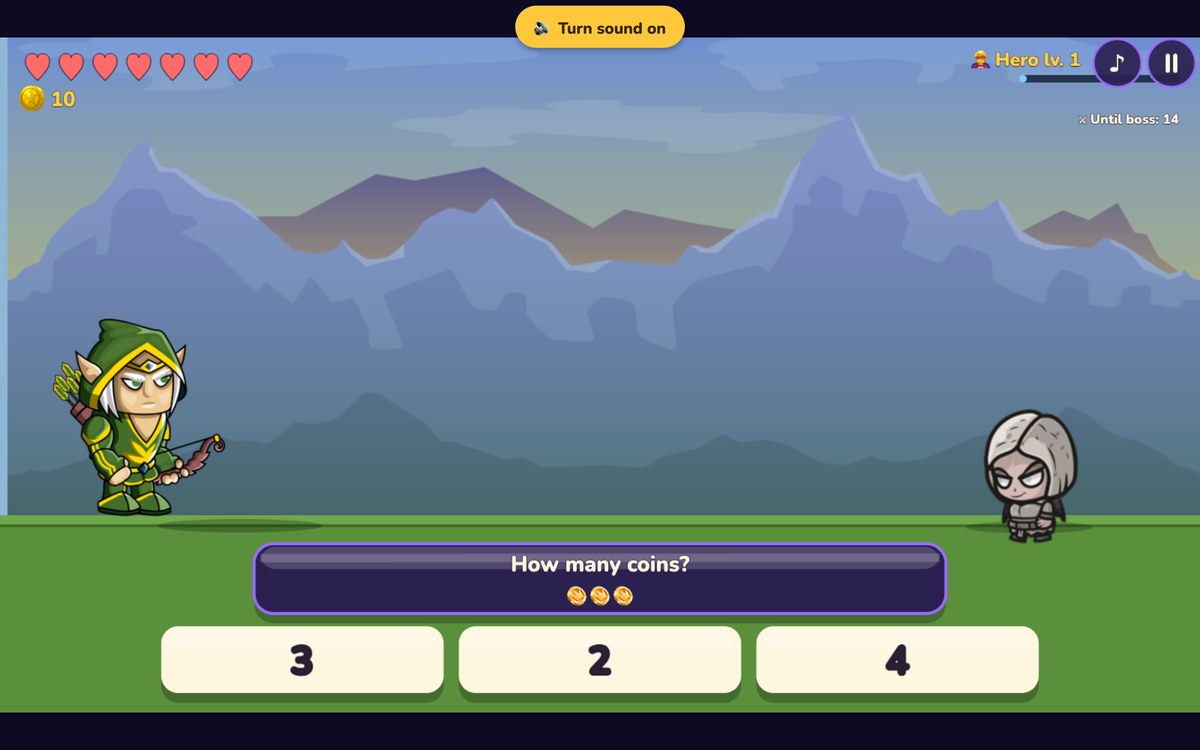
Our multiplication games for kids turn one of the trickiest milestones in elementary math into something your child actually wants to do. Instead of drilling flashcards at the kitchen table, kids practice their times tables through quick, playful rounds that reward speed and accuracy. The goal is simple: build real fluency so that 7 x 8 comes out as fast as their own name, without the tears or the boredom.
Why play beats rote memorization
Multiplication is the gateway to division, fractions, and just about every math topic that follows. When a child has to stop and count up to find a product, the harder concepts pile up before the basics are solid. Games solve this because they add the one thing worksheets can't: a reason to want the right answer quickly.
Short, repeated sessions also work better than long study marathons. A few minutes of focused play several times a week helps facts move into long-term memory, while keeping the whole thing low-stakes and pressure-free. Our Math Blaster multiplication game is built exactly for this rhythm: fast questions, instant feedback, and a steady sense of progress that keeps kids coming back.
How kids progress through the times tables
Times tables are far less overwhelming when they're learned in a smart order rather than straight from 1 to 12. Most children build confidence fastest by mastering the easy patterns first, then layering on the harder facts.
Start with the friendly tables
- 2s — doubling, which most kids already understand intuitively.
- 10s — just add a zero; an instant confidence win.
- 5s — the familiar 5, 10, 15, 20 counting pattern.
Then tackle the tougher middle
- 3s and 4s — short, repeatable patterns that build on the 2s.
- 6s, 7s, and 8s — the facts most kids find hardest, worth extra repetition.
- 9s — has a neat finger trick and a digit-sum pattern kids love.
- 11s and 12s — the final stretch, easier once the rest are automatic.
The 6s, 7s, and 8s deserve special attention. There are really only a handful of genuinely tricky facts left once a child knows the rest, and games make those last few stick through repetition that never feels like a chore.
What makes a multiplication game actually work
Not every game helps. The ones that build true fluency share a few traits worth looking for, whether you use ours or another.
Fast, frequent, and fair
Good multiplication games keep rounds short so a child can fit one in before dinner. They give immediate feedback, so a wrong answer becomes a quick correction rather than a lingering mistake. And they revisit facts often enough that recall becomes automatic.
Just-right challenge
The best games scale to your child, mixing in known facts to keep confidence high while gradually introducing tougher ones. A child who feels successful stays motivated, and motivation is what turns a few minutes of play into months of steady practice.
Getting started at home
You don't need a plan or a printout. Let your child play a few rounds, notice which facts slow them down, and gently revisit those tables the next day. Celebrate speed improvements rather than perfection, and keep sessions short and upbeat. Over a few weeks, you'll hear the pauses disappear as recall becomes instant.
Ready to dive in? Try the Math Blaster times tables game right on this page, and explore more practice across our math games for kids hub when your child is ready for addition, subtraction, and beyond.
The science behind the games
Every Dad4Kids game is built on one simple truth: children want to play, not study — so we turn learning into a game worth replaying. The method draws on peer-reviewed research in game-based learning, motivation, and how memory works.
- Tokac et al. (2019). Effects of game-based learning on students' mathematics achievement: A meta-analysis. Journal of Computer Assisted Learning.
- McLaren et al. (2017). A computer-based game that promotes mathematics learning more than a conventional approach. International Journal of Game-Based Learning.
- Deng et al. (2020). Digital game-based learning in a Shanghai primary-school mathematics class: a case study. Journal of Computer Assisted Learning.
- Alotaibi (2024). Game-based learning in early childhood education: a systematic review and meta-analysis. Frontiers in Psychology.
- Lampropoulos & Sidiropoulos (2024). Impact of gamification on students' learning outcomes and academic performance: a meta-analysis. Education Sciences.
- Taylor & Boyer (2019). Play-based learning: evidence-based research to improve children's learning experiences. Early Childhood Education Journal.
FAQ
What age should kids learn times tables?
Most children begin learning times tables around ages 7 to 9, typically in 2nd through 4th grade. Many kids start with the 2s, 5s, and 10s earlier, then work toward full fluency through 12 by about age 9 or 10. Every child moves at their own pace, so confidence matters more than hitting an exact age.
What is the easiest way to memorize times tables?
Learn them in order of difficulty rather than 1 to 12: master the 2s, 5s, and 10s first, then 3s and 4s, then the trickier 6s, 7s, and 8s. Combine that with short, daily practice and a game that gives instant feedback, which moves facts into long-term memory far faster than long study sessions.
Are multiplication games effective for learning?
Yes. Games build fluency because they pair repetition with motivation, so kids practice the same facts many times without losing interest. The quick feedback also corrects mistakes immediately, which helps the right answers stick.
How long should my child practice multiplication each day?
Short and frequent beats long and rare. Just five to ten minutes of focused play, several times a week, is enough to build real recall while keeping the experience pressure-free and enjoyable.
Which times tables are hardest for kids?
The 6s, 7s, and 8s tend to be the toughest because they lack the easy patterns of the 2s, 5s, and 10s. Once a child knows the simpler tables, only a small number of genuinely hard facts remain, and targeted game practice clears them up quickly.
By Evgeny Arsentiev, PhD · Last updated: June 2026